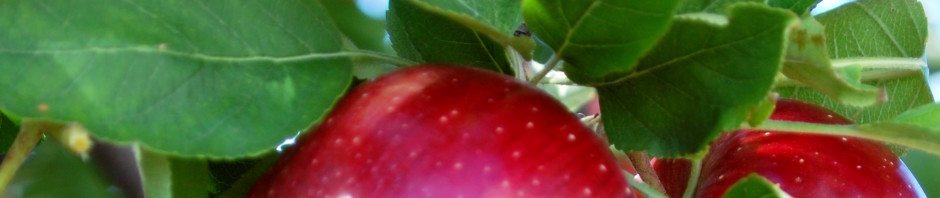
Still At It

Heavy snowfall the last week of January and frigid temperatures in February put a halt to our annual pruning for several weeks. We were just getting somewhat “caught up” with things again but now we are experiencing a week of early spring rains. So once again things are on “hold.” We’re not really on a strict time schedule. We just need to finish before the trees start to run sap and come out of their winter dormancy. Our plan, however, is to have pruning completed and the aisleways of the orchard cleared of prunings and brush by the end of March.

A sure sign that Spring is just around the corner is the arrival of seed and nursery catalogs in the mail. Paging through the catalogs gets a person anxious to work the soil and plant garden seeds, flowers and trees. Besides the catalog mailings there are educational sessions scheduled for growers to renew their chemical applicator licenses. Growers are required to apply for and maintain licenses for application of chemicals to their crops and fields. There are measures in place by the Offices of the State Chemists to provide transparency and good oversight to ensure safe growing practices. Consumers can be assured that growers are making every effort to provide food products that are safe for their consumption.

Like all farming operations orchard work is both physically and mentally demanding. Orchard operations require manual laborers, “real bodies,” who have a high level of physical endurance. Working in an orchard isn’t sedentary or predictable. It requires critical thinking, solving real problems and taking responsibility when things break down. Believe me, things DO break down and nine out of ten times, things break at the most ill opportune times.

Orchard work is hard but satisfying if you have desire, a love for your land and a willingness to be a good steward of your land. People need food. The question isn’t if orchards need more technology to provide food security but rather it’s a question of who in the future is going to be willing to think, move, lift, bend, fix and endure the rigors of being a grower.

Posted in Uncategorized | Leave a comment

Cut Away!

Fifteen inches of snow and single digit temperatures have put our orchard pruning on hold. We have been making good progress on the annual tree pruning up to this point, probably about 60 percent finished.

My focus of this post is a mature, fruit bearing tree and not a newly planted one. Understanding a fruit tree’s anatomy is very useful for a person to know before making any pruning cuts. Fruit bud, leaf bud, spurs and sprouts are terms that are good to have knowledge about before making pruning cuts.

Fruit buds, also called flower buds, contain embryonic flower parts and are the reproductive part of the plant. Fruit buds usually flower, get pollinated and grow into apples. Most of an apple tree’s fruit bud growth occurs in May, June, July and August. This period of growth becomes the fruit bud for the following growth season. So, the fruit bud for our 2026 apple harvest was actually developed in the summer of 2025. Pretty amazing, isn’t it? Fruit buds are generally fatter, rounder and fuzzier in appearance. They usually appear on older wood and these branches, or laterals, are horizontally on the tree and angle outward. Some fruit bud can be removed when pruning but care should be taken to leave enough fruiting buds unharmed as this is where your potential fruit crop will develop.

Leaf buds are sometimes referred to as “vegetative growth.” Leaf buds are smaller, narrower, pointed and lay flatter to the branch producing leaves and new shoots. First year vegetative growth with no fruit buds is called a water sprout. Vertical wood on an apple tree is more likely to develop leaf buds. Most of the vertical growth on a tree can be removed when pruning especially all water sprouts. Fruit trees can’t be treated as a shrub, shearing off only the tips. Tip pruning results in wild end growth or water sprouts.

Pruning is a continual learning process with no one really being an “expert.” Studying book illustrations will not teach as much as actually going into the orchard and pruning. Many home gardeners lack confidence when pruning their fruit trees and are afraid of making a mistake and so they do nothing – BIG mistake. Advantages of pruning far outweigh the disadvantages. Proper pruning methods make those big, beautiful apples we all look forward to enjoying at fall harvest.

Posted in Uncategorized | Leave a comment

We’re Back!!

Time has slipped away! We’ve made it through another harvest season and now trying to get back into a writer’s mode. Lots of good intentions but as previously stated, time slipped away.

We are currently digging out from 5 inches of snow and experiencing zero temperature. Wow, winter is here. With winter temperatures, the trees become dormant or maybe a better analogy, a deep sleep. Apple trees turn a deep gray in color when they attain dormancy. With dormancy comes our next challenge and that is annual pruning. When these cold temperatures become somewhat more moderate the pruning equipment will be taken out to the orchards and work will begin. We consider pruning as the beginning of another season and so another season will soon be underway.

We had a good harvest season with a bountiful crop of produce. Peaches were not as productive as other years but we did have a limited crop to offer to our customers. Apples, however, were very good in quantity, appearance and flavor. Both the peaches and apples had great flavors this season. We were blessed as some of the area orchards were damaged by a late Spring freeze.

The time period between the last days of apple sales and the beginning of pruning is spent repairing and putting equipment in storage, orchard cleanup, taking soil samples, applying fertilizer and any other odds and ends that arise. We try to organize and inventory supplies and get an assessment of what worked and what didn’t work so well in our business. Even small family businesses have to evaluate and make improvements to survive.

We are in the process of developing new plans for the orchards. Removing older trees and replacing those trees with plantings of more popular varieties, ways to reduce herbicide usage and improving marketing strategies are just a few of the areas we are concentrating.

Hopefully, 2026 will find me more focused in my postings. Merry Christmas and Happy New Year to all.

Posted in Uncategorized | Leave a comment

Just Peachy!

This month of July has just about reached the halfway mark on the calendar. It’s been a somewhat wet month so far and hot. Both of these factors pose significant challenges for growing peaches. These weather conditions impact the quality of the fruit and also the trees.

Fungal diseases thrive in hot and humid weather conditions. Fungal diseases like brown rot and peach scab spread rapidly. Brown rot infests the fruit at all stages and affects fruit quality and reduces the yield significantly. Control of brown rot is difficult without regular fungicide applications.

Excessive rain can cause peaches to absorb too much water, diluting the sugar content and making them less flavorful. Besides affecting flavor, too much water can lead to fruit cracking and splitting. Fruit that splits can be damaged by fungal infections as well as pests (bugs). It is a misnomer to think that more water creates bigger and better fruit. Drier weather conditions actually create better tasting peaches.

High temperatures cause peaches to sometimes ripen prematurely leading to poorer texture and reduced storage life. A shorter development period also limits the time for fruit to accumulate carbohydrates resulting in sometimes a smaller fruit. Trees get stressed in hot temperatures thus becoming more vulnerable to pests and diseases.

Harvesting is a real challenge in overly wet and hot weather conditions. Peaches have a narrow window for harvesting and wet conditions hinder the picking process. We “spot pick” our peaches. That is we pick fruit daily as the peaches ripen versus “clearing off” and picking everything on the trees. It is hard to pick peaches in the rain.

The next question that most consumers have is if the peach is freestone or cling. Peaches are classified as cling stone, semi-cling and freestone. Cling peaches are the type where the fruit is woven into the pit. Freestone are those peaches where the pit separates from the flesh. Semi-cling are in-between where the flesh is attached but not wholly embedded into the pit.

Early season peaches are usually “clings.” Cling peaches are often smaller in size, juicier and sometimes sweeter. Usually more firm in texture, cling peaches are a good choice for home canning and making jams and jellies. Many commercial processors use cling peaches for canning. For those who prefer not to pry out or cut around the pit, cling peaches are delicious eating out of hand.

Freestone peaches are harvested later in the season. Freestones are the easiest to deal with as when it is cut the pit comes right out. Sometimes though, a freestone peach is not a “freestone” until it is completely ripe. The flesh does not grow into the stone but the stone sticks a little and is a little difficult to remove.

Semi-cling peach varieties are not seen very often at the markets. They’re a hybrid of cling and freestone peach varieties. They typically are sweet but with relatively easy-to-remove pits.

Because peaches are seasonal and not good for long term storage, consumers look forward to local peach season. Lots of challenges for us this year but we’re starting to harvest and looking forward to another peach season.

Posted in Uncategorized | Leave a comment

So Far, So Good

Entering this month of June, things in the orchards look good. Fruit development is good, trees look healthy, insects and fungus are under control. Perhaps the only factors out of control are the weeds and grasses and this is due somewhat to the wetter than normal weather.

Good rainfall, lots of sunshine and warmer weather promote the growth of grasses and weeds. Without the use of herbicides the only other method to maintain control of grasses and weeds from getting out of control is mowing the aisle ways and weedeating under the trees. Thus, we’ve spent most of the last several days getting the weed eaters out and putting them to daily use. We’ve been mowing aisle ways for several weeks.

Why be concerned about grasses and weeds? Our purpose in controlling weeds, especially under the trees, is to stop the growth of unwanted spores and fungi that grow on these plants. If weeds grow out of control and get too tall, our applications of the fungicides can not reach the fruit on the trees and the fruit becomes covered with diseases such as sooty apple blotch, fly speck and brown rot. Blemished fruit is unattractive to the eyes of the consumers and does not sell well at markets.

We haven’t noticed too much fireblight in the trees this season. Fireblight is the nemesis of any orchard, especially pears, as it is very destructive to the actual tree itself. Fireblight is caused by a bacterium that is carried by rains, bees, aphids or other insects. Once infected, new tree growth, especially the tips, begin to wither and blacken as if scorched by fire. Thus, the name, “fireblight.” Pruning off affected branches and applying antibiotic sprays assist in the control of this disease. Heat destroys the bacterium as well and as we enter this month of June, we should see hotter temperatures so we anticipate Mother Nature taking control of any more fireblight issues.

We are well aware of the dangers caused by overuse of chemicals in our orchards. We use all chemicals minimally and follow all directions that the manufacturer provides for proper and safe application and use. There are more and more studies providing data regarding the effects of chemical usage, especially herbicides. Please, please always read and follow label directions. Individuals can never be too careful when using chemicals in their gardens or flower beds.

Posted in Uncategorized | Leave a comment

Crop Conditions

Since the start of this month of April, our peach trees and apple trees have bloomed. A really glorious sight that we never tire of seeing. Nothing more satisfying after a winter of pruning than seeing this beautiful display of Mother Nature. It makes the hard work of the winter season feel rewarding and satisfying.

The peach trees were the first to bloom this year, somewhat later than our “normal” time. The later bloom was because of the very cold winter we experienced this year. For a time we thought there would be no blooms at all as nothing was happening but Mother Nature has her own course of direction and peach trees were in bloom the first days of April. As what usually occurs in this area, a hard frost (freeze) on April 7th killed many of the blossoms. However because some of the trees had blossoms that were not yet open we feel that all is not lost. We’ve noticed some development of fruit bud so we feel we may have some peaches to offer to our customers. Peaches are now in what is considered “shuck split.” Time will tell how many peaches will develop for us to pick.

The apple trees were spectacularly in full bloom for Easter Sunday. Wow, what a sight! Passer byes actually stopped to take in the breath taking view. From this point onward we do not want freezing temperatures as that would result in widespread damage to our fruit crops. The cold temperatures that we did experience were of short duration and the flowers of the apple trees being still in tight cluster were not sensitive to the cold.

Posted in Uncategorized | Leave a comment

Spring…..Around the Corner?

Mother Nature has teased us this past few days. We’ve had temperatures in the 70’s with brilliant sunshine. Working in the orchard felt great, no layers of coats, gloves or insulated work boots. Great progress was made in finishing pruning, cleaning the aisle ways and picking up any pieces of wood cut from the larger limbs that were removed during pruning. Getting things ready for the coming season.

A horticultural oil spray, also known as dormant oil, will be the next step. Dormant oil refers more to when it should be applied, i.e. dormancy, when the tree’s active growth is suspended. Things would be simple if year after year we could mark our calendar and follow this same schedule. However, there is no set schedule to follow as varying weather patterns will create different situations. The goal to spraying is prevention. The orchardist sprays to prevent disease and not cure disease. After the fruit is damaged, the fruit cannot be healed, no matter what chemical applications are sprayed or how heavily those chemicals are applied.

Newer dormant oil formulations are typically refined from petroleum oil such as mineral oil. The formulation contains an emulsifier to help water mix with the oil thus providing a better and more complete coverage of the plant surfaces. Dormant oil is not harmful to pollinators and safe for human ingestion. There is no toxic residue and the spray dissipates quickly.

Dormant oil covers leaf and limb surfaces, suffocating insects and some insect eggs which reduce harmful insect infestations. It may also interfere with insect feeding. Dormant oil is one of the most important and effective sprays to apply. We were advised by an entomologist that if only one spray was applied during the season, it should be dormant oil. That’s how important it is to the orchard. It controls a variety of insects such as aphids, mealybugs, thrips, whiteflies, caterpillar eggs, leafhoppers, scale and mites.

When applying any spray, be sure you understand the purpose of the chemical you are using and ALWAYS follow the manufacturer’s recommended usage rates. All spray materials have label instructions and please read all labels carefully. Any spray can be harmful to health and the environment if it is misused.

Posted in Uncategorized | Leave a comment

Temperature Tolerance

Another factor that should be considered when selecting and planting fruit trees is your climate zone. Fruit trees normally are winter hardy. Apple trees can generally withstand temperatures as low as twenty-five degrees BELOW zero. Peach trees on the other hand cannot tolerate temperatures much lower than fifteen degrees BELOW zero. In fact we were advised by a horticulturalist from Purdue University in Lafayette, IN, that the cut-off point of degree tolerance for peaches was zero degrees. For every degree below zero, a crop loss of ten percent could be expected. Thus, at minus ten degrees an entire peach crop would/could be lost. We have had experience with these temperature extremes and found his theory to be most accurate. This current year is going to be a “toss up.” We have just experienced a very cold week with temperatures dipping near zero and staying in the single digits for several days. Only time will tell as one can never predict “Mother Nature.”

Most local nurseries and garden centers have years of experience in selling nursery stock and are knowledgeable about which varieties are suitable to plant in your climate zone. Personnel at mail order nurseries can be helpful in recommending what varieties are best suited for planting in your local area as well, just ask when placing an order. Again, buying from reputable garden centers or nurseries will give you the most successful results.

The length of the growing season also has an impact on the type and variety of fruit tree you can choose to plant. “Frost Free Days’ is a term used to define the length of the area’s growing season. Frost free days are the number of days between the last frost in spring and the first frost of fall. The average last frost date varies by location. For our area (southeastern Indiana) the last spring frost can range from April 11th through May 10th. Frost date estimates can be found by checking with the local county extension office, using “The Old Farmer’s Almanac” or researching your area’s frost dates on the internet.

Apple trees can be planted in late fall or early spring. We prefer to plant apple trees in early spring when the frost is out of the ground. New root development occurs best when the soil temperature is above forty-five degrees. We find that planting in early spring encourages good root development .

In our area most varieties of apple trees can withstand the temperature variations we experience throughout the year. However, if you choose to plant peaches or cherries, we recommend choosing more hardy varieties to plant.

Posted in Uncategorized | Leave a comment

Ready, Set, Plant!

As we enter the month of February, the days seem to be just a little bit longer and with more sunshine, a little bit brighter. Spirits rise as another Spring approaches. With Spring comes the urge to get outside, work the soil and plant. Fruit trees are usually on that list. We have numerous telephone calls asking if we would sell one or two apple trees. Sorry to say, we do not sell nursery stock. In fact we purchase most of the trees we plant in our orchards from reputable nurseries.

Selecting a tree for planting can be mind boggling but it doesn’t really have to be. Like all projects, planting trees in an orchard or in your back yard takes planning. First, pick a site where the tree is to be planted giving it ample room to grow. Check the soil for fertility, water availability and then choose the variety of tree. One issue to be aware of is that your favorite variety of apple in the grocery store is not always available for purchase. New varieties such as Cosmic Crisp, Sweet Tango and Snapdragon, etc. are registered varieties and some have patents held by the Universities that developed them. Thus, certain varieties are not going to be available for sale without signed agreements and huge royalties.

So where to go to purchase apple trees? Nursery catalogs appear in mail boxes every year around mid January. Seed companies also have fruit trees available for order. One drawback when ordering from a catalog is the purchaser can not evaluate the quality of the tree(s) before it arrives. That’s why it’s important to place orders with reputable nurseries. When possible order at least one year old trees with trunks between 1/2 inch and 3/4 inch in diameter. Try to avoid really large trees as larger trees have difficulty adjusting to transplanting them. Nurseries usually send trees “bare roots.” Nurseries “pull” trees from their inventories and trees are packed for shipping without soil growing around the roots. Reputable nurseries pack trees in damp sphagnum moss or plastic to keep the tree roots from drying out. Quality trees should arrive dormant (not showing growth) with healthy and moist roots. Most nurseries will not sell an individual tree or small amount of tree stock.

Going to a local garden center is your best bet to buy an individual tree or a small number of trees. Look for trees that have straight trunks, are about 1/2 inch to 3/4 inch in diameter and four to five feet in height. Read the labels on any tree to make sure it is self pollinating. Self pollinating means that it doesn’t need another tree to pollinate it so it can produce fruit. Trees at garden centers are usually potted. Make sure the tree is not root bound in the pot or has many roots growing out of the bottom of the pot. This may be an indication that the tree has been potted for an extra season. It is advisable to plant your trees as soon as conditions are favorable.

The growth and size of the tree is dependent on another factor and that is the type of root stock that the tree was grafted. In a prior post on this website there is a detailed description on the various root stocks and how those types of root stock affect the trees’ growth and development. It would be a good reference point for those individuals who wish good success in their plantings.

Posted in Uncategorized | Leave a comment

Another Season Begins

This past week we are having a short respite from the tedious chore of pruning apple trees. A major winter storm dumped ten inches of snow. Deep drifts from the gusty northeastern winds along with single digit temperatures have kept us indoors most of this week. Pruning equipment doesn’t perform well in these weather conditions and neither do we.

We approach pruning as the start of another season. Pruning is the first step in getting a marketable product for our fresh markets. Pruning is a skill acquired through years of experience. It is practically impossible to become a good pruner merely by studying illustrations in a book. Good tools in first-class condition are very important for effective results in pruning fruit trees. We use pneumatic pruners. Using pneumatic pruners gives our workers the ability to do a high quality job with less effort than manual saws and loppers.

The best time to start pruning apple trees will depend upon the size of the job and the amount of the available labor. Most of the tree pruning is done during the dormant season when the trees have dropped their leaves. There are several reasons for this: the branches are easily visible, other orchard operations are less pressing, less danger of pulling bark away from the pruning cut and causing wounds. We try to get a jump start on pruning because of the possible severity of the winter season such as what we’re experiencing now. We started our pruning in early December as soon as our trees were dormant. Our mature trees in the older orchard are pruned first. The young trees, particularly the ones in the u-pik orchard, are pruned last. Young trees are more tender and susceptible to freezing injury when temperatures dip in early and mid winter.

Pruning is essential for producing quality fruit. The principle behind pruning is to open up the tree by removing any sprouts and unproductive branches. Opening up the trees allows them to admit more light, allows the sprays to penetrate the foliage providing better coverage of the fruit, thus protecting it from fungus and insects.

There is probably not a single pruning method that is always perfect. No one is an expert pruner as there is always room for improvement and always something new to learn. The best teacher is first hand experience in an orchard. According to the long range weather forecasts, looks as if we may be getting some more of that “orchard experience” next week.

We

Posted in Uncategorized | Leave a comment